Introduction: Unraveling the Blueprint of Life
When people first encounter the complexities of genetics, a common point of confusion revolves around how hereditary material is passed down through generations. A frequent question that surfaces is whether DNA comes exclusively from one parent, or if both share equal footing in shaping our biological identity.
To put it simply: DNA does not only come from the father. In fact, human genetics is a collaborative masterpiece involving genetic contributions from both biological parents. However, the story of how we inherit our DNA is far more nuanced than a simple fifty-fifty split. While the vast majority of our genetic code is a balanced partnership between mother and father, certain specialized compartments within our cells follow entirely different rules.
Understanding where our DNA comes from requires looking past a single definition of "DNA" and examining the two primary types found within the human body: nuclear DNA and mitochondrial DNA. Each follows a distinct path from parent to offspring, creating a fascinating interplay between paternal and maternal lineage.
The Core Inheritance: Nuclear DNA and the 50/50 Split
The overwhelming majority of the human genome—roughly 99.9% of our total genetic information—is housed inside the nucleus of our cells. This is known as nuclear DNA, and it dictates everything from our eye color and height to our predisposition to certain health conditions.
When a sperm cell fertilizes an egg cell, a precise genetic merger takes place:
The Maternal Contribution: The egg contributes 23 chromosomes, carrying roughly half of the nuclear genetic blueprint.
The Paternal Contribution: The sperm contributes its own set of 23 chromosomes, providing the other half of the nuclear blueprint.
This results in a zygote containing 46 chromosomes (23 pairs). Because of this symmetrical pairing, every individual inherits approximately 50% of their nuclear DNA from their mother and 50% from their father. This dual inheritance is the foundation of Mendelian genetics, governing the traits, physical features, and familial resemblances that span generations. Consequently, if someone asks whether DNA comes only from the father, the answer regarding nuclear DNA is a definitive no.
Beyond the Nucleus: The Mitochondrial Exception
While nuclear DNA is a balanced joint venture, the plot thickens when we look outside the nucleus into the cytoplasm of the cell. Here resides mitochondrial DNA (mtDNA), which controls the function of mitochondria—the cellular powerhouses responsible for generating chemical energy.
Unlike nuclear chromosomes, mitochondria carry their own independent circular genome. For decades, a fundamental tenet of classical biology has been that mitochondrial DNA is inherited exclusively from the mother (maternal inheritance).
The Egg's Abundance: An egg cell is massive compared to a sperm cell and contains hundreds of thousands of mitochondria.
Sperm Destruction: A sperm cell contains only a small cluster of mitochondria in its midpiece, which are primarily used to power its journey to the egg. Upon fertilization, mechanisms within the egg actively target, mark, and destroy paternal mitochondria to prevent "paternal leakage".
As a result, genealogical tracing using mitochondrial DNA allows scientists to map maternal lineages deep into human prehistory—leading to concepts like "Mitochondrial Eve".
---
This video provides a helpful overview of unique and rare genetic inheritance patterns that challenge traditional expectations in medical science.

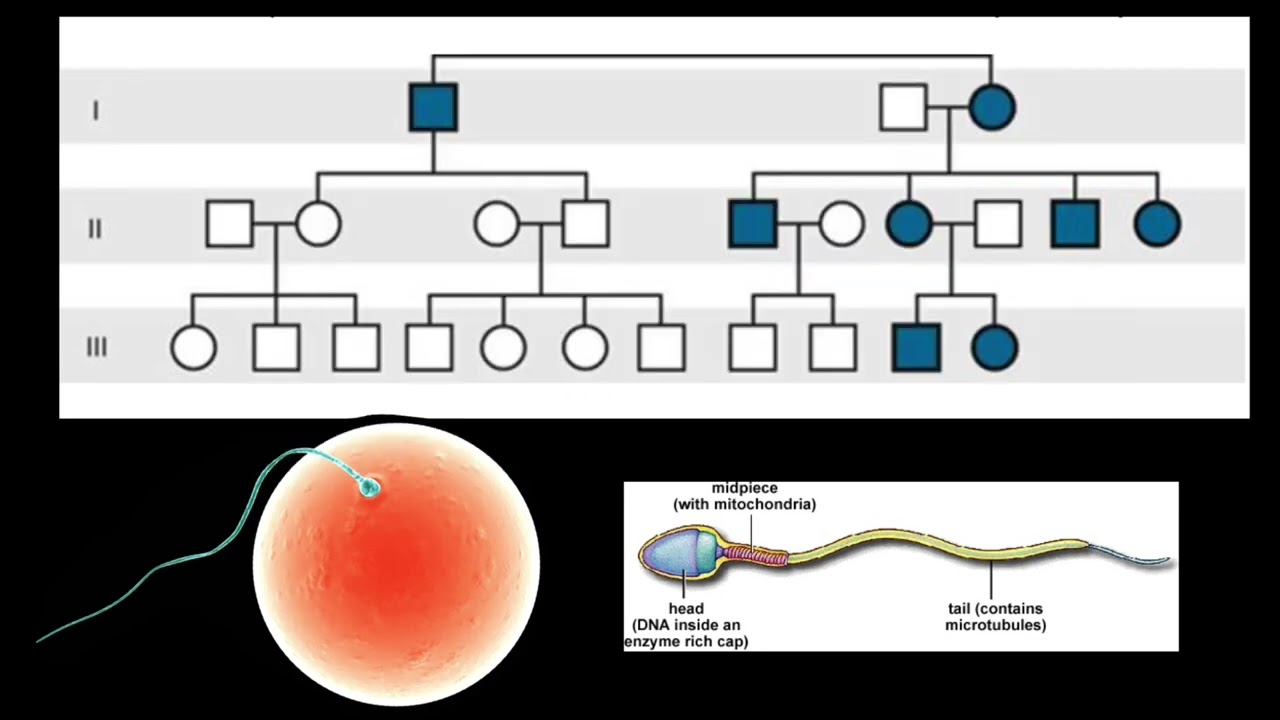
The Maternal Twist: Mitochondrial DNA
While nuclear DNA splits down the middle, giving both parents an equal 50 percent stake in your genetic makeup, there is a fascinating exception to the rule. Mitochondrial DNA (mtDNA) breaks the mold by coming exclusively from your mother.
To understand why, we have to look inside the cell's "powerhouses"—the mitochondria, which generate the energy your body needs to function. Unlike the nucleus, mitochondria have their own separate, small loop of DNA containing 37 genes.
Why Only Mom?
During fertilization, a sperm contributes almost exclusively its nuclear DNA to the egg cell. Its mitochondria are located in the tail, which is typically shed or actively destroyed once the sperm enters the egg.
As a result, every single human inherits their mitochondrial DNA solely from their mother. If you have siblings, you all share the exact same mitochondrial DNA, and it matches your mother's, your grandmother's, and your maternal ancestors' lines going back thousands of years.
Tracking History Through DNA
This unique maternal inheritance pattern makes mitochondrial DNA an incredible tool for scientists:
Genealogical Tracing: Because mtDNA doesn't mix and recombine like nuclear DNA with every generation, it changes very slowly through rare mutations. This allows geneticists to trace maternal lineage deep into human history.
Forensic Science: Mitochondrial DNA is present in thousands of copies per cell (compared to just two copies of nuclear DNA). This makes it immensely useful in forensics for identifying old, degraded, or damaged remains where nuclear DNA is completely gone.
The Verdict
So, does DNA only come from the father? Definitely not.
Your genetic blueprint is a collaborative masterpiece. You receive half of your nuclear DNA from your dad and the other half from your mom, determining everything from your height to your eye color. However, your cellular energy source—your mitochondrial DNA—comes directly and exclusively from your mother.
Ultimately, you are a genetic mosaic, carrying a legacy built by both parents, but with a special, unbroken ancient thread connecting you directly down your mother's side of the family tree.
Key Takeaway: Nuclear DNA is a 50/50 split from both parents, but mitochondrial DNA is passed down exclusively through the maternal line.
Comments
No comments yet. Be the first to react.