Who's the Smartest Person in the World? (Part 1)
The human fascination with genius is as old as civilization itself. From ancient philosophers debating the nature of wisdom to modern internet forums tracking intelligence quotients (IQ), society has an insatiable appetite for identifying the ultimate outlier. When people ask, "Who's the smartest person in the world?" they are usually looking for a single name, a definitive throne, and a neat number that proves human intellectual supremacy.
However, answering this question requires unraveling a complex web of psychometrics, historical anomalies, and modern media claims. The reality of human intelligence is far too vast, multidimensional, and stubborn to be captured by a single title.
The Myth and Mechanics of Extreme IQ Scores
To understand why pointing to a single "smartest person" is problematic, we first have to look at how intelligence is measured. The concept of the IQ test, developed over a century ago, was originally designed to identify children who needed educational assistance, not to rank the cognitive elite.
The Statistical Wall: Standardized IQ tests like the WAIS-IV are norm-referenced.
They are designed to measure intelligence within a bell curve where the average is 100, and a standard deviation is typically 15 points. The Ceiling Effect: Most professionally validated clinical tests hit a hard ceiling around 160. Beyond that point, the rarity of the population makes accurate standardization statistically impossible.
The Problem with High-Range Tests: Unofficial "high-range" online tests attempt to measure scores past 200, but these lack clinical validation, normative data, and uniform consensus among psychologists.
Despite these limitations, history and contemporary culture are packed with contenders who have claimed legendary scores.
Historical Icons and Record Holders
For decades, the name most synonymous with the peak of human intelligence was Marilyn vos Savant. In 1985, the Guinness Book of Records listed her with a childhood-tested IQ score of 228, earning her global fame.
Similarly, historical figures like William James Sidis—a 19th-century child prodigy—have been credited in lore with IQ estimates soaring between 250 and 300. Modern historians and psychometricians note that these numbers are entirely retrospective guesses, lacking any documentation from a legitimate, administered test.
In recent years, modern claimants have stepped into the spotlight. Figures like South Korean researcher YoungHoon Kim have received media attention and certification from specific high-range organizations for scoring exceptionally high on experimental tests.
Why Intelligence Cannot Be Reduced to a Number
Even if an infallible test existed, defining "smartness" strictly by pattern recognition, working memory, and abstract logic ignores the diverse spectrum of human capability. Psychologist Howard Gardner’s theory of Multiple Intelligences reminds us that cognitive brilliance manifests in vastly different domains:
True genius is rarely just a high score on a paper exam; it is the unique capacity to synthesize knowledge, create novel solutions, and profoundly impact the world across art, science, emotional leadership, and practical innovation.
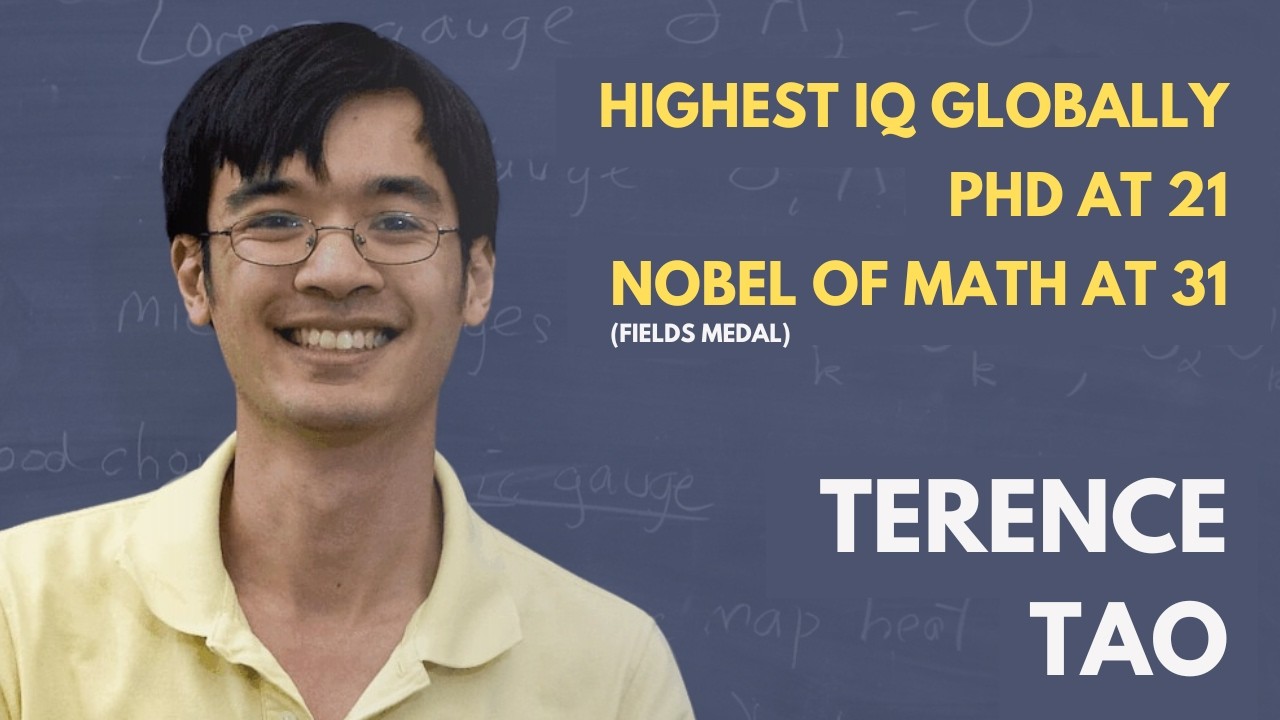
Consider someone like Terence Tao, a mathematician often described as having one of the highest functioning intellects alive.
Which aspect of human intelligence do you think is most important: raw analytical processing speed, or creative problem-solving ability?
Beyond the Numbers: Defining True Genius
While high-IQ societies and standardized tests frequently attempt to crown a single individual—such as citing modern high-scorers like YoungHoon Kim or mathematical powerhouses like Terence Tao—experts universally agree that human intelligence cannot be neatly reduced to a single numerical score.
The Limitations of IQ
Narrow Focus: Traditional intelligence tests emphasize pattern recognition, logic, and mathematical fluency.
Excluded Traits: They entirely omit emotional intelligence, artistic creativity, practical problem-solving, and visionary leadership.
Context Matters: Brilliant minds often thrive within specific domains rather than possessing an all-encompassing omniscience.
Real-World Impact
Ultimately, history demonstrates that the most consequential minds are not defined by abstract test metrics, but by what they build, discover, or create for humanity. Whether through solving complex mathematical conjectures, pioneering breakthroughs in artificial intelligence, or crafting timeless artistic works, true intellectual greatness is measured by lasting contribution rather than a diagnostic label.
"Genius is one percent inspiration and ninety-nine percent perspiration." — Thomas Edison
This video provides an in-depth look at the life, work, and mindset of one of the world's leading mathematical minds.

Comments
No comments yet. Be the first to react.